Expense Records for Businesses in Great Neck Estates, NY

Gary Gal

I have helped businesses in Great Neck Estates, NY, fix messy expense records that blocked clear financial decisions. In doing so, our team at Andemax often saw how disorganized tracking quietly erodes margins and creates avoidable compliance risks.
To address this, accurate expense tracking requires consistent categorization, timely recording, and secure documentation of every transaction. These practices ensure businesses maintain clear records to support tax filings, audits, and informed financial planning.
Without these fundamentals in place, financial decisions become guesswork and risks compound over time. The following guide shows how to build reliable systems that keep your records accurate and your business on solid ground.
Key Takeaways
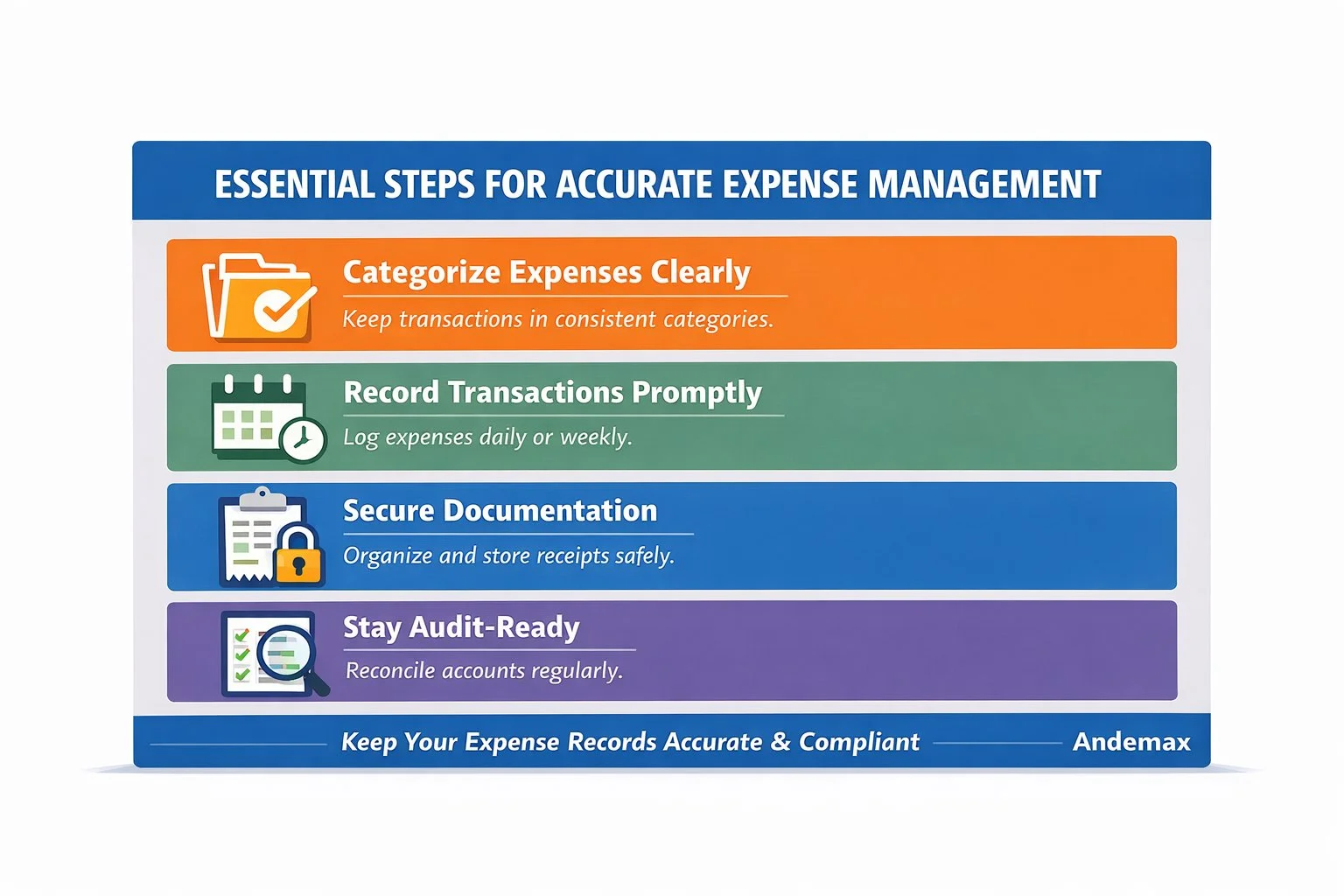
Categorize Expenses Clearly: Prevent reporting errors and audit risk by keeping every transaction in a consistent category.
Record Transactions Promptly: Logging expenses daily or weekly ensures accuracy and reliable cash flow tracking.
Secure Documentation: Organize receipts and invoices to maintain compliance and simplify audits.
Stay Audit-Ready: Reconcile accounts regularly to avoid penalties and strengthen financial credibility.
With these fundamentals in place, we will now dive deeper into strategies and best practices for mastering expense management.
Maintain Your Expense Records Organized and Audit-Ready. [Schedule Your Expense Management Review Here] or call our Great Neck Estates office at (800) 344-5226 for expert guidance.
Consistent Categorization of Expenses
Consistent categorization of expenses is the structured process of assigning every business transaction to a defined financial category. A common challenge arises when inconsistent labels or overlapping categories distort financial reports and reduce accuracy over time.
The key aspects below address how proper categorization improves clarity, ensures compliance, and supports reliable financial analysis.
Why Categorization Matters
Categorization matters because it organizes expenses into consistent groups for accurate financial tracking and reporting. Proper grouping prevents misclassification, which can distort budgets, tax calculations, and profitability analysis.
Here are the key benefits on how categorization can help you achieve clearer financial insights and optimize decision-making:
Improves financial clarity so you see spending patterns
Simplifies tax preparation by grouping deductible expenses
Reduces errors during bookkeeping and reporting
Supports better budgeting decisions
Review and adjust categories quarterly to capture evolving expenses and maintain consistent financial clarity.
Common Expense Categories to Use
Common expense categories provide a structured way to classify business transactions for accurate financial analysis and reporting. Clear categories reduce confusion, prevent misallocation, and ensure consistency across accounting and tax processes.
Implement these standard categories in your workflow to maintain consistency and improve record accuracy:
Office supplies
Rent or lease payments
Utilities and internet
Employee wages and benefits
Travel and meals
Marketing and advertising
Limit categories to essential groups to avoid complexity while preserving accurate tracking and reporting.
How to Build a Simple Categorization System
Building a simple categorization system involves creating clear, consistent labels for all business expenses to ensure organized financial records. Consistency prevents errors, simplifies reporting, and supports accurate budgeting and tax compliance.
Follow this step-by-step workflow to set up a straightforward and reliable categorization process:
List all your recurring expenses
Group similar expenses together
Assign clear category names
Use the same categories every time
Review and adjust quarterly
Start with broad categories and refine gradually to balance simplicity with detailed financial insights.
Timely Recording of Transactions
Timely recording of transactions is the systematic practice of logging every financial activity as it occurs or within a consistent schedule. Delays or irregular entries often create gaps that compromise accuracy and hinder effective cash flow management.
The subtopics below explore strategies, tools, and routines that ensure transaction records remain precise and actionable.
Daily vs Weekly Entry Practices
Daily and weekly entry practices determine how frequently business transactions are recorded to maintain accurate financial data. Frequent entries reduce the risk of missing transactions and improve real-time visibility into cash flow.
Evaluate your business needs with this comparison table to select the best recording frequency:
Frequency | Best For | Benefit |
Daily | High-volume businesses | Maximum accuracy |
Weekly | Small businesses | Balanced effort and control |
Monthly | Not recommended | High risk of errors |
Align entry frequency with transaction volume to balance accuracy and workload without creating a backlog.
Choosing the Right Tools for Speed and Accuracy
Choosing the right tools for expense tracking ensures transactions are recorded accurately and efficiently without manual errors. Effective tools automate repetitive tasks, improve data consistency, and provide real-time financial insights.
Consider these recommended options to streamline your process and boost accuracy:
Accounting software with automation features
Mobile apps for receipt capture
Cloud storage for easy access
Integration with bank accounts
Select tools that integrate with existing systems to streamline data entry and reduce manual errors.
Creating a Simple Recording Routine
Creating a simple recording routine establishes a consistent schedule for logging transactions accurately and on time. Regular routines prevent overlooked entries, reduce errors, and improve overall financial reliability.
Use the following step-by-step workflow to implement an efficient and repeatable recording routine:
Set a fixed time each day or week
Gather all receipts and invoices
Enter transactions into your system
Double-check entries for accuracy
Store documents securely
Set fixed times for recording transactions and automate reminders to ensure consistency and completeness.
Secure Documentation and Storage
Secure documentation and storage involve maintaining all financial records in a protected, organized, and easily retrievable manner. Risks such as lost receipts, data breaches, or misfiled documents can undermine compliance and operational efficiency.
The sections that follow highlight methods, formats, and safeguards for maintaining reliable and accessible records.
Digital vs Physical Recordkeeping
Digital and physical recordkeeping define whether business documents are stored electronically, on paper, or using a combination of both methods. Each approach affects accessibility, organization, and long-term security, influencing how efficiently records can be managed.
Explore the key differences and advantages of each method in the following table:
Method | Pros | Cons |
Digital | Easy access, searchable | Needs backup |
Physical | Tangible copies | Hard to organize |
Hybrid | Balanced approach | Requires more effort |
Combine digital and physical copies for critical documents to maximize accessibility and legal compliance.
Backup and Data Protection Strategies
Backup and data protection strategies ensure business records remain safe from loss, corruption, or unauthorized access. Strong protections preserve financial integrity, support compliance, and enable quick recovery after unexpected incidents.
Apply these strategies to safeguard your records effectively using the following practices:
Use cloud storage with automatic backups
Keep copies on external drives
Protect files with passwords
Limit access to authorized users only
Schedule automated backups and test them regularly to ensure you can recover records during unexpected data loss.
Organizing Receipts and Documents
Structured receipt and document organization requires a clear system for sorting and storing financial records. By keeping everything accessible and orderly, businesses reduce errors and strengthen compliance during audits or reviews.
You can maintain organized records efficiently by implementing the following practices:
Sort receipts by date and category
Use consistent file naming conventions
Store digital copies in labeled folders
Keep records for at least 3–7 years
Use a consistent naming and filing system so you can quickly retrieve receipts and supporting documents when needed.
For a more comprehensive approach, refer to our guide on what financial records businesses in Great Neck Estates, NY should keep to know exactly all the records you need to organize.
Maintaining Audit-Ready Expense Records
Maintaining audit-ready expense records requires keeping all expense data complete, accurate, and supported by verifiable documentation at all times. A common challenge is missing receipts, inconsistent categorization, and delayed updates, which weaken compliance and increase audit risk.
The sections below show how you can identify required documents, avoid critical mistakes, and maintain readiness throughout the year.
Essential Expense Documents Every Business Must Keep
Essential expense documents include all records that verify, support, and justify business-related spending for accurate reporting and compliance. Without complete documentation, financial records become unreliable and may fail to meet audit or tax requirements.
To ensure proper documentation, you should focus on collecting and maintaining the following key records:
Receipts for all business-related purchases
Supplier and vendor invoices
Bank and credit card statements
Expense reports and reimbursement records
Contracts tied to recurring expenses
Keep both digital and backup copies of critical documents to ensure access during audits or disputes.
Common Expense Tracking Mistakes That Trigger Audits
Common expense tracking mistakes that trigger audits include errors that create inconsistencies, gaps, or unsupported financial records. These issues often arise from poor processes, delayed entries, or missing documentation, which weaken compliance and accuracy.
Focus on correcting these critical mistakes in your expense tracking process using the following guidelines:
Mixing personal and business expenses in the same account
Failing to keep or losing receipts for transactions
Misclassifying expenses under incorrect categories
Recording expenses late or not at all
Keeping incomplete or unclear documentation
Conduct regular internal reviews to catch and correct errors before they become compliance issues.
How to Keep Expense Records Audit-Ready Year-Round
Building a simple categorization system involves creating clear and consistent labels for all business expenses to organize records effectively. Consistent categorization prevents errors, improves reporting accuracy, and supports informed financial decisions.
Follow this step-by-step workflow to implement a reliable and manageable expense categorization system for your business:
Record expenses immediately after each transaction
Attach receipts or supporting documents to every entry
Reconcile accounts monthly to ensure accuracy
Review categories and correct inconsistencies regularly
Store all records securely with proper backups
Schedule monthly reviews to maintain accuracy and prevent last-minute audit stress.
Secure Complete Control Over Your Business Expenses. [Schedule Your Free Expense Review Here] or call (800) 344-5226 for expert assistance today.
How an Accounting Firm Can Help Streamline Expense Management?
An accounting firm helps businesses streamline expense management by providing expertise, systems, and oversight for accurate financial tracking. Firms analyze transactions, implement consistent categorization, and ensure compliance with tax and audit requirements.
Explore how a professional accounting partner can help you enhance accuracy, efficiency, and control over your expense management:
Consistent Categorization: Reduce errors by assigning all expenses to clear, defined categories.
Automated Tracking: Capture transactions in real time using integrated accounting software.
Regular Reconciliation: Match entries to bank statements to ensure accuracy.
Audit-Ready Records: Keep receipts and invoices organized for compliance.
Expert Insights: Identify cost-saving opportunities and improve financial decisions.
Ensure your expense records remain accurate, organized, and audit-ready by exploring our full range of professional accounting services.
Summary Table
Component | Key Action | Benefit |
Categorization | Use consistent categories | Clear financial insights |
Recording | Track expenses regularly | Accurate data |
Documentation | Store receipts securely | Proof for audits |
Compliance | Maintain complete records | Avoid penalties |
Conclusion
Maintaining accurate expense records for businesses in Great Neck Estates, NY, is not optional—it is critical for financial clarity, compliance, and operational efficiency. Businesses that implement disciplined tracking and documentation gain a significant advantage in decision-making and audit preparedness.
One tip is to reconcile receipts and digital entries weekly, not monthly, to catch discrepancies before they escalate. Many companies fail here, leaving hidden errors that compound and create costly reporting issues.
The risk of sloppy expense management includes penalties, lost deductions, and audit exposure, while the reward is smoother operations and stronger financial confidence. Protect your business by contacting our Great Neck Estates firm at Andemax for a confidential review on (800) 344-5226 today.
Frequently Asked Questions
Why is expense tracking important for businesses?
Expense tracking helps you understand your spending and manage cash flow effectively. It also ensures accurate tax reporting and reduces the risk of financial errors.
How often should I record business expenses?
You should record expenses daily or weekly to maintain accuracy. Frequent updates prevent missed transactions and reduce the chance of errors.
What is the best way to store receipts?
Digital storage is the most efficient method for keeping receipts organized and accessible. It allows quick retrieval and reduces the risk of losing important documents.
Can I mix personal and business expenses?
No, mixing expenses creates confusion and can lead to compliance issues. Keeping them separate ensures accurate records and simplifies tax reporting.
How long should I keep financial records?
Most businesses should keep records for at least three to seven years. This ensures you are prepared for audits and legal requirements.
What tools can help with expense tracking?
Accounting software and mobile apps can automate and simplify expense tracking. These tools improve accuracy and save time.
What happens if my records are incomplete?
Incomplete records can lead to penalties, failed audits, and poor financial decisions. Maintaining complete documentation protects your business and ensures compliance.