IRS Audit Process Explained for Businesses in Great Neck Estates, NY

Gary Gal

Navigating an IRS audit process in Great Neck Estates, NY, requires more than just submitting paperwork; it requires a strategic defense. In my years representing local businesses, we often see these notices trigger immediate stress, cash flow pressure, and the very real fear of compounding penalties.
An audit notice does more than disrupt daily operations; it exposes your entire filing history to a level of scrutiny most management teams aren't prepared for. Having guided countless firms from the initial 'Letter 2205' through to final resolution, we know that protecting your financial stability starts with controlling the flow of information.
Understanding the specific timelines and your rights as a taxpayer is the only way to move from panic to progress. Here is the summary of what you need to understand about the IRS audit process.
Key Takeaways
The 30-Day Response Rule: Missing the deadline on your IRS notice can lead to an automatic "disallowance" of deductions, increasing your tax bill before you even speak to an auditor.
Audit Type Determines Strategy: A Correspondence Audit (by mail) is low-impact, while an Office or Field Audit requires an in-person defense. Know which one you are facing.
Documentation is Your Only Shield: The IRS requires a "contemporaneous" paper trail. Verbal explanations are not legal proof; bank statements and receipts are.
You Have the Right to Representation: Under the Taxpayer Bill of Rights, you can appoint a CPA as Power of Attorney to handle all auditor communication on your behalf.
Let’s dive into the details and see how audits actually work.
What Is the IRS Audit Process for Businesses?
The IRS audit process is an official review of a company’s financial records to verify accuracy and compliance with federal tax laws. It involves examining tax returns, deductions, income reports, and supporting documentation to ensure that reported information matches IRS and third-party records.
Why Might Businesses in Great Neck Estates Face an IRS Audit?
Being selected for an IRS audit can feel unexpected, but certain patterns make some businesses more likely to be reviewed. Understanding these triggers helps you stay proactive and protect your financial records.
Below is a breakdown of the most common reasons the IRS focuses on specific businesses:
Unusually large deductions or tax credits compared to industry norms
Frequent errors or inconsistencies on tax returns
Cash-heavy businesses that may have higher reporting risks
Rapid growth or unusual revenue spikes
Random selection based on IRS statistical formulas
Even small mismatched figures between bank statements and reported income can flag your business, so double-check all numbers before filing.
What Common Triggers Can Lead to an IRS Audit?
Certain actions on your tax return can immediately draw the IRS’s attention, even if unintentional. Knowing these common triggers helps you prevent mistakes that could lead to penalties or extended reviews.
Common Trigger | Potential Audit Risk | Recommended Solution |
|---|---|---|
Errors or inconsistencies | Can trigger IRS questions or delays. | Check entries and review filings. |
Large deductions or credits | Draws attention if above industry norms. | Keep receipts and justify claims. |
Cash-heavy operations | Harder to trace, increasing scrutiny. | Track all cash flows carefully. |
Rapid revenue growth or spikes | May trigger income verification. | Keep detailed records and explain changes. |
Random IRS selection | Even compliant businesses can be chosen. | Stay organized and respond quickly. |
High deductions relative to revenue are often flagged, so document and justify every deduction with clear supporting records.
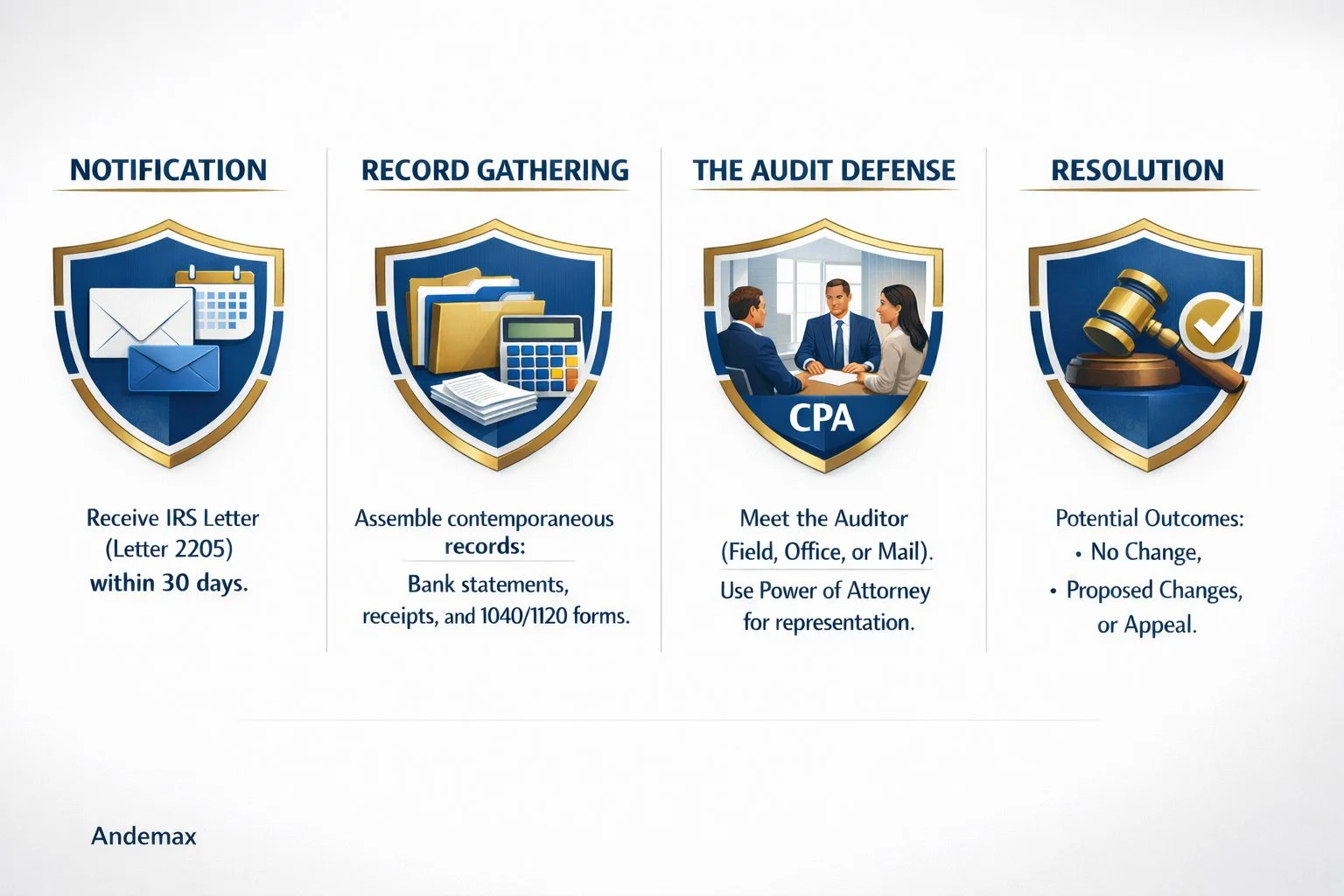
What is the Process for an IRS Audit in Great Neck Estates, NY?
Next Step: [Schedule Your Confidential Audit Review Here] Or call our Great Neck office directly at (800) 344-5226.
The IRS audit process can feel intimidating, but knowing the exact steps makes it far more manageable. Understanding each stage ensures you can respond efficiently and avoid unnecessary stress or penalties.
Let’s walk through each step of the process so your business in Great Neck Estates can stay prepared and compliant.
Step 1: Notification and Initial Contact
The first sign of an audit is usually an official notice from the IRS. Recognizing what to look for in these letters helps you act promptly and strategically.
To ensure your response is accurate and timely, consider these key points when reviewing the notice:
IRS sends a formal letter outlining the audit type and the tax year under review
The letter specifies the requested documents and response deadlines
Always verify that the notice is legitimate using IRS contact information
Step 2: Gathering Documents and Records
Organized records are the backbone of a smooth audit. Preparing the required documents in advance saves time, prevents errors, and demonstrates your professionalism.
The following checklist can guide you in assembling all necessary documentation for the audit:
Copies of tax returns for the audited years
Bank statements, invoices, and receipts for expenses
Payroll and employee records
Documentation supporting business deductions and credits
Step 3: The Field or Office Audit
Audits can occur in your office, at an IRS office, or via correspondence, and each type has its own procedures. Knowing the format in advance helps you prepare and interact confidently with IRS agents.
Depending on the audit type, the process may include several different formats that involve the following:
Audit Type | Format / What Happens |
|---|---|
Office Audit | Meet with the IRS agent at their office to review documents. |
Field Audit | IRS agent visits your business to examine records onsite. |
Correspondence Audit | Review is conducted via mail or a secure online portal. |
Step 4: Audit Outcomes and Resolutions
The audit concludes with findings that determine if changes are needed to your tax return. Understanding potential outcomes allows you to respond appropriately and plan next steps.
Knowing the possible outcomes helps you respond correctly and plan your next steps.
Audit Outcome | What It Means | Next Step / Solution |
|---|---|---|
No change | IRS accepts your records. | No action needed. |
Proposed changes | Additional taxes or penalties may apply. | Review, pay, or discuss adjustments. |
Appeal | You can contest IRS findings. | File an appeal and provide supporting documents. |
Even minor inconsistencies between your records and reported income can trigger IRS scrutiny, so ensure all documents are accurate, organized, and backed by clear supporting evidence.
How Can Businesses Prepare for an IRS Audit?
Preparation is the most effective way to reduce stress and protect your business during an IRS audit. By being proactive, you improve your chances of a smooth process and reduce the risk of costly errors.
The following preparation strategies, combined with our full range of professional accounting services, will help you stay organized and ready for any stage of the audit.
Organize Financial Records
Keeping accurate records is essential to demonstrate compliance. Organized financial documentation allows the IRS to verify your claims quickly and efficiently.
Make sure to maintain the following records in a structured and accessible way:
Tax returns from the past 3–5 years
Receipts for all business-related expenses
Bank statements and credit card statements
Payroll records and invoices
If you need a system, here are practical tips to properly organize tax records year-round for businesses in Great Neck Estates, NY.
Hire a Tax Professional or CPA
Professional guidance can make a significant difference during an audit. A CPA or experienced tax professional understands IRS procedures and can help prevent errors that trigger further scrutiny.
Their support usually includes the following tasks:
Reviewing your financial records for potential audit triggers
Preparing necessary documentation for submission
Representing your business in meetings or correspondence with the IRS
Professional guidance can make a big difference during an audit. Unsure if you need help? See our guide about the 7 signs you need professional tax help in Great Neck Estates, NY.
Respond Promptly to IRS Notices
Timely responses demonstrate cooperation and professionalism. Delays can result in penalties or additional IRS attention.
Follow this step-by-step approach to ensure you respond effectively:
Open and review all IRS communications carefully
Verify deadlines and requested documents
Submit responses on time, either electronically or by mail
Delaying responses or submitting incomplete documents is one of the most common mistakes businesses make; always respond fully and on time.
What Are a Business’s Rights and Responsibilities During an IRS Audit in Great Neck Estates, NY?
Knowing your rights and responsibilities protects your business and ensures fair treatment. Awareness of what the IRS expects allows you to act confidently and maintain control of the audit process.
Below are the key rights and responsibilities every business owner should keep in mind.
Understand Your Legal Rights
The IRS provides protections to ensure taxpayers are treated fairly. Knowing these rights helps prevent miscommunication and preserves your options throughout the audit.
Your primary rights include:
Right to professional representation
Right to appeal any IRS decisions
Right to confidentiality of records and communications
Maintain Professional Communication
Your behavior during an audit impacts its efficiency and outcome. Clear, respectful communication reduces misunderstandings and keeps the audit on track.
Follow these guidelines to maintain professionalism:
Respond promptly to all IRS inquiries
Provide only the information requested
Keep all communications documented and organized
Many businesses over-explain or provide extra information; only share what is necessary to answer the IRS questions accurately.
What Common Mistakes Do Businesses Make During an Audit?
Even small missteps can complicate the IRS audit process. Being aware of frequent errors allows you to avoid them and streamline the audit.
The following mistakes are most often observed and should be actively prevented.
Common Mistake | Effect | Recommended Solution |
|---|---|---|
Disorganized or incomplete records | Causes delays and extra scrutiny. | Keep files complete and well-organized. |
Late responses to IRS notices | Can trigger penalties or more questions. | Respond promptly to all communications. |
Over-explaining or volunteering extra info | Can create new inquiries. | Answer only what is requested. |
Misinterpreting notices or instructions | May lead to errors or missed deadlines. | Read carefully and ask for clarification. |
Businesses often assume minor errors are negligible, but even small inconsistencies can trigger further scrutiny—always double-check every entry and document.
Real-World Audit Scenarios in Great Neck Estates, NY
While every audit is unique, most local businesses face similar challenges. Seeing how these situations unfold can help you move from "panic" to a structured plan of action.
Scenario 1: The Case of the Misreported Consulting Income
The Situation: A Great Neck consultant failed to report a late 1099 for a Manhasset client.
The Challenge: The IRS flagged underreported income with potential 20% penalties and audit escalation.
The Resolution: We filed a Power of Attorney, reconstructed income with bank statements and project logs, and proved the discrepancy was unintentional. Penalties were fully abated.
Scenario 2: Retail Inventory Audit at Americana Mall
The Situation: A family boutique near Americana Mall had inconsistent inventory reporting during seasonal fluctuations.
The Challenge: IRS examiners questioned the cost of goods sold, risking federal and NYS adjustments with penalties.
The Resolution: We compiled detailed inventory records and reconciliations. IRS accepted the original reporting, avoiding extra taxes and penalties.
Scenario 3: Medical Practice Depreciation Dilemma
The Situation: A Great Neck medical practice claimed accelerated depreciation on new diagnostic equipment near North Shore University Hospital.
The Challenge: IRS threatened to disallow deductions and impose penalties, with NYS potentially following suit.
The Resolution: We prepared a full depreciation schedule with supporting logs and successfully defended it. Penalties were abated for reasonable cause.
In almost every Great Neck audit we manage, the difference between a "No Change" result and a heavy penalty isn't just having the documents—it’s how those documents are organized and presented to the auditor.
If you're concerned about how these audit scenarios might impact your business, get the clarity you need from our local expert. [Schedule Your Free Consultation Here] or call us at (800) 344-5226.
How Can an Accounting Firm in Great Neck Estates, NY, Help With the IRS Audit Process?
Partnering with an accounting firm gives your business expertise and confidence during an audit. Professionals guide you through complex IRS procedures and ensure your records are accurate and compliant.
Below is how accounting firms typically assist business owners.
Document Preparation and Review
A firm ensures your records meet IRS standards. They verify that every document is organized and supports your claims. Typical tasks include:
Reviewing past tax returns for errors or omissions
Organizing receipts, invoices, and financial statements
Preparing a comprehensive documentation package
Representation and Communication
Having a professional represent your business can reduce stress and improve audit outcomes. Experienced accountants handle IRS communications effectively. Their services include:
Communicating directly with IRS agents
Explaining audit requirements and procedures
Advocating on your behalf during meetings or correspondence
Strategic Advice and Appeals
Accounting firms guide in minimizing liabilities and exercising your rights. They can identify errors, suggest corrections, and help navigate appeals if needed. Key areas of support include:
Reviewing proposed audit changes before you agree
Advising on appeals and compliance strategies
Highlighting potential deductions or adjustments you may have missed
Hiring a firm early, before any audit notice, is far more effective than waiting until the IRS initiates contact, as pre-audit reviews can prevent mistakes that trigger audits in the first place.
Summary Table: IRS Audit Process Overview
Step | Description | Action Points |
Notification | IRS sends audit letter | Review scope, note deadlines |
Document Collection | Gather financial records | Organize receipts, invoices, and bank statements |
Audit Meeting | Office or field review | Present organized records, answer questions |
Outcome | IRS findings | Accept, negotiate, or appeal |
Post-Audit | Follow-up actions | Implement recommendations, ensure compliance |
Always double-check calculations and maintain clear, accessible documentation. Small errors can unnecessarily escalate audit intensity.
Final Thoughts
In my experience, the IRS audit process in Great Neck Estates, NY, is often more procedural than punitive, if handled correctly. Businesses that ignore details or deadlines usually face higher adjustments, penalties, and unnecessary stress during the audit review.
A common mistake is overexplaining or volunteering extra information without guidance, which can create new inquiries or trigger extended reviews. The benefit of strategic, concise responses is faster resolution, lower risk, and protection of both cash flow and reputation.
When audits are handled properly, they can be resolved efficiently with minimal disruption to operations or finances. For a confidential review of your situation, call our experienced Great Neck Estates firm at Andemax on (800) 344-5226 to protect your business today.
Frequently Asked Questions
How long does an IRS audit take?
Most IRS audits for businesses last between a few weeks and several months, depending on complexity. Simple correspondence audits are usually quicker than field audits.
Can the IRS audit a business multiple years in a row?
Yes, the IRS can audit multiple tax years, especially if discrepancies or high-risk patterns are present. Each year is reviewed separately.
Do all businesses in Great Neck Estates face audits?
No, audits are selective, based on risk factors, deduction patterns, and random selection. However, all businesses should remain prepared.
What happens if I disagree with the IRS audit results?
You have the right to appeal and request an independent review. An accounting firm or tax attorney can assist in filing the appeal.
Is it necessary to hire a CPA for an IRS audit?
While not required, a CPA or tax professional improves your chances of a smooth audit. They can review records, prepare documents, and represent your business professionally.
Can I settle with the IRS instead of paying full penalties?
Yes, options like installment agreements or offers in compromise may be available, depending on your situation. Professional advice is recommended to explore these options.
How should I organize records for an audit?
Keep tax returns, bank statements, invoices, receipts, and payroll records in chronological order. Organized documentation reduces audit stress and demonstrates accuracy.