How Professional Services and Contractor Payments Work as Tax Deductions

Gary Gal

Running a business often means hiring others to help you do things right. You might hire an accountant to keep your books clean, a lawyer to review contracts, or a contractor to build a website or manage marketing. These costs are part of doing business, but how they show up on your tax return matters more than many owners realize.
Professional services and contractor payments are typically tax-deductible, provided they meet specific IRS guidelines. When they are handled correctly, these deductions can lower your taxable income and keep you compliant. When they are handled poorly, they can lead to missed deductions, IRS notices, or penalties that could have been avoided.
It may seem complicated, but you don’t have to worry as this guide explains everything in simpler terms. By the end of this article, you will understand:
When professional services and contractor payments are tax-deductible
What types of fees qualify, and which ones do not
How to deduct contractor payments correctly
What records do you need to stay compliant
Common mistakes that cause problems with the IRS
What Counts as Professional Services for Tax Deductions

Professional services are fees you pay to experts who provide skilled services to your business. These are not employees. They are outside professionals you hire when needed.
Common Deductible Professional Fees
Many types of professional fees are fully deductible when they relate to your business operations.
Here are common examples:
Legal fees tax deduction
Contract review or drafting
Business compliance advice
Help with leases, trademarks, or disputes
Accounting fees are tax-deductible
Bookkeeping
Tax preparation
Payroll setup
Financial reporting
Consulting and advisory services
Business strategy
Operations consulting
Management coaching
Marketing and creative services
Branding
Website design
Advertising management
Copywriting
IT and technical services
Software setup
Cybersecurity support
Systems maintenance
If the service helps your business run, grow, or stay compliant, the fee is usually deductible.
Professional Fees That Are Not Fully Deductible
Not all professional services qualify the same way. This is where many business owners make mistakes.
Personal services are not deductible
If the service is personal, it cannot be deducted as a business expense. For example:
A lawyer preparing your personal will
An accountant handling personal finances
Capital-related fees are not immediately deductible
If a professional fee is tied to buying or improving a long-term asset, you usually cannot deduct it right away.
Examples:
Legal fees to buy a building
Consulting fees to acquire a business
These costs are added to the value of the asset and deducted over time through depreciation.
Mixed-use services must be split
If a service is partly personal and partly business, only the business portion is deductible. You need records to support the split.
Contractor Payments Tax Deductions Explained

Contractor payments are another major category of deductible business expenses.
A contractor is someone you pay to do work for your business, but they are not your employee.
Who Qualifies as an Independent Contractor
Correct classification matters more than most people realize.
An independent contractor usually:
Controls how they do the work
Uses their own tools or equipment
Works for multiple clients
Is paid per project or task
An employee usually:
Follows your schedule
Uses your tools
Works only for you
Is paid hourly or on a salary
Misclassifying employees as contractors can lead to fines, back taxes, and penalties. The IRS looks at behavior, financial control, and the relationship between you and the worker.
What Contractor Expenses Are Deductible
Payments to independent contractors are deductible when they are ordinary and necessary for your business.
Examples include:
Freelance designers or writers
Web developers
Marketing specialists
Construction subcontractors
Virtual assistants
IT support providers
Both U.S. and foreign contractors can qualify. The key is that the work is for your business, and the payment is documented.
How to Deduct Contractor Payments and Professional Fees
Knowing an expense is deductible is only half the job. You also need to deduct it correctly.
Where These Deductions Are Reported
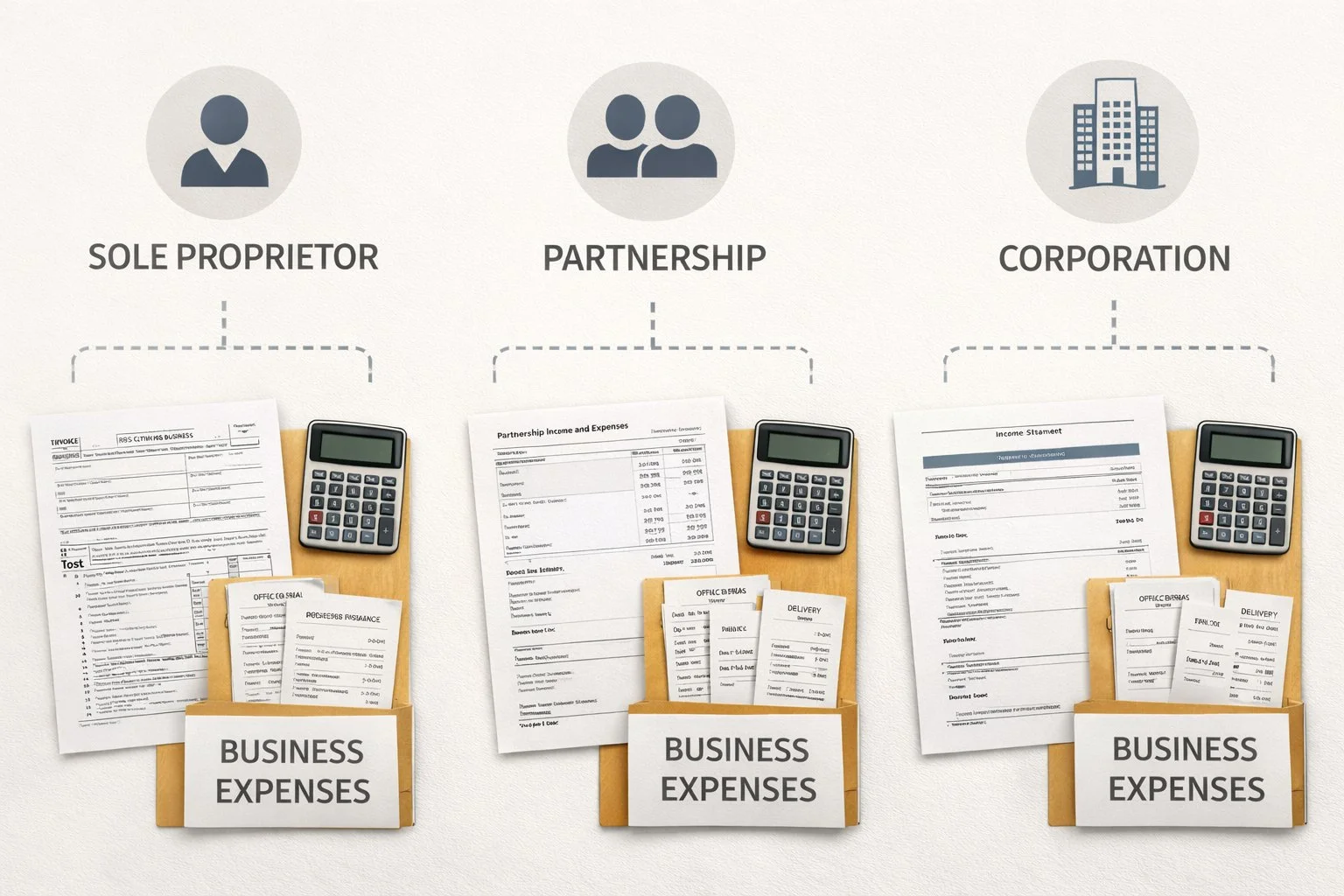
Where you report these expenses depends on your business structure.
Sole proprietors and single-member LLCs
Use Schedule C (Form 1040)
Contractor payments go under Contract Labor
Professional fees go under Legal and Professional Services
Partnerships
Use Form 1065
Report contractor and professional expenses in the appropriate expense categories
Corporations
Use Form 1120
Deduct professional and contractor fees as business expenses
Using the right category helps avoid confusion during audits.
Do You Need a 1099 to Deduct Contractor Payments?
This is one of the most common questions business owners ask.
If you pay an independent contractor $600 or more in a year, you usually must issue Form 1099-NEC.
Important points:
The $600 rule applies per contractor, per year
The contractor must receive a copy
The IRS must receive a copy
Here is the key detail many people miss.
You can still deduct the expense even if:
The payment was under $600
No 1099 was required
As long as you have proper records, the expense can still be deducted. The 1099 is a reporting requirement, not the rule that decides deductibility.
For a broader explanation of how different business expenses are classified and deducted, including New York-specific rules, see our complete guide on what counts as a business expense in New York.
Recordkeeping Requirements for Contractor and Professional Service Deductions

Good records protect your deductions.
What Records the IRS Expects
To support contractor payments and professional services deductions, you should keep:
Invoices showing the service provided
Contracts or engagement letters
Proof of payment, like bank statements or canceled checks
Notes explaining the business purpose
The IRS expects records to show:
Who was paid
How much was paid
When it was paid
Why was it paid
Keep these records for at least three years.
Best Practices to Protect Your Deduction
Simple habits can save you stress later.
Use a separate business bank account
Pay contractors and professionals from business funds
Use accounting software to track expenses
Save digital copies of invoices and contracts
Write short notes describing the business purpose
Clean records make audits easier and deductions safer.
Common Mistakes That Lead to Lost Deductions or Penalties

Many problems come from avoidable mistakes.
Misclassifying workers
Calling someone a contractor does not make them one. Misclassification is a major audit trigger.
Deducting personal expenses
Personal legal or accounting costs cannot be claimed as business deductions.
Capitalizing errors
Deducting asset-related fees too early can cause issues later.
Missing 1099 forms
Failing to issue required 1099s can lead to penalties, even if the deduction itself is valid.
Poor documentation
No invoices or vague records make deductions harder to defend.
How This Works for the Contractor or Service Provider

If you are the one receiving payment for professional services, the rules are different.
Contractors must:
Report all income, even if no 1099 is received
File Schedule C with their tax return
Pay self-employment tax if net income is $400 or more
Contractors can deduct their own ordinary and necessary expenses, such as:
Home office costs
Supplies and equipment
Advertising
Travel
Professional fees they pay to others
Understanding both sides of the transaction helps everyone stay compliant.
Final Thoughts

Professional services and contractor payments are some of the most common and valuable business deductions. When handled correctly, they lower your taxable income and support your business growth.
The key is simple:
Make sure the expense is business-related
Classify workers correctly
Keep clean records\
Follow reporting rules
If a situation feels unclear or involves large amounts, working with a qualified tax professional is a smart move. The cost of good advice is often far less than the cost of fixing mistakes later.
Handled properly, these deductions work for you, not against you.
Frequently Asked Questions
Are contractor payments deductible for small businesses?
Yes. Contractor payments are deductible if the work is for business purposes and properly documented.
Can freelancers deduct the professional services they hire?
Yes. Freelancers can deduct professional fees that support their business.
Are legal and accounting fees deductible every year?
Yes, as long as they are for business operations and not personal or capital-related.
What records do I need to deduct contractor expenses?
Invoices, contracts, proof of payment, and a clear business purpose.
Can I deduct contractor payments without a 1099?
Yes, if the payment was under $600 or no 1099 was required, and you have proper records.
Can reimbursed contractor expenses be claimed as tax deductions?
Reimbursed expenses are deductible only if they are necessary, documented, and treated as business expenses, not pass-through costs.
Do you need a written contract to claim contractor payments as a deduction?
No, but a written contract helps support the expense and improves documentation for tax compliance.