How to Choose the Right Retirement Plan for Your Small Business

Gary Gal

Running a small business keeps you busy. You wear every hat. You manage money, talk to customers, and try to grow your company step by step. With all that on your plate, it is easy to push your own retirement planning to the side.
But choosing the right retirement plan is one of the smartest moves you can make. It helps you save more for your future. It lowers your taxes. It also makes your business more attractive if you want to hire and keep good people.
Think of it as building a safety net for yourself and for your team. You do not need to be a financial expert. You just need the right plan that matches your size, income, and goals.
In this guide, you will learn:
What counts as a retirement plan for small businesses?
The key factors to help you choose.
The main plan options and how they compare.
A simple decision path to find your best match.
Common mistakes to avoid.
Clear answers to the most common questions.
Let’s get started!
What Counts as a “Small Business Retirement Plan”?
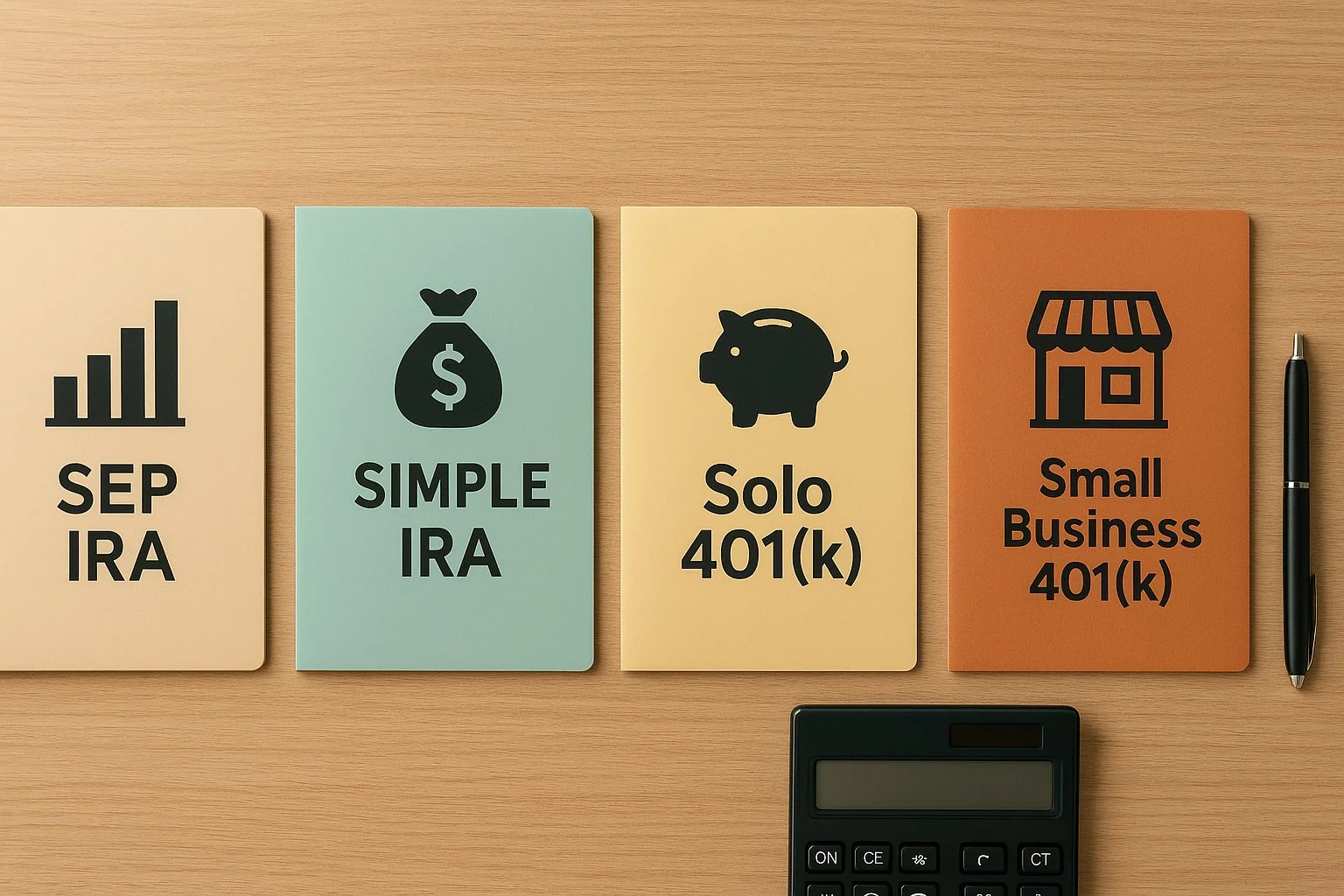
A small business retirement plan is any tax-advantaged savings plan that business owners can offer to themselves or to their employees. These plans follow IRS rules, which means you can save money for retirement while also getting tax benefits.
They are different from personal retirement accounts because:
They let you save more.
They may allow employer contributions.
They follow specific rules for businesses with and without employees.
Common examples include SEP IRAs, SIMPLE IRAs, Solo 401(k)s, and small business 401(k)s.
How to Choose the Right Retirement Plan: The Key Factors
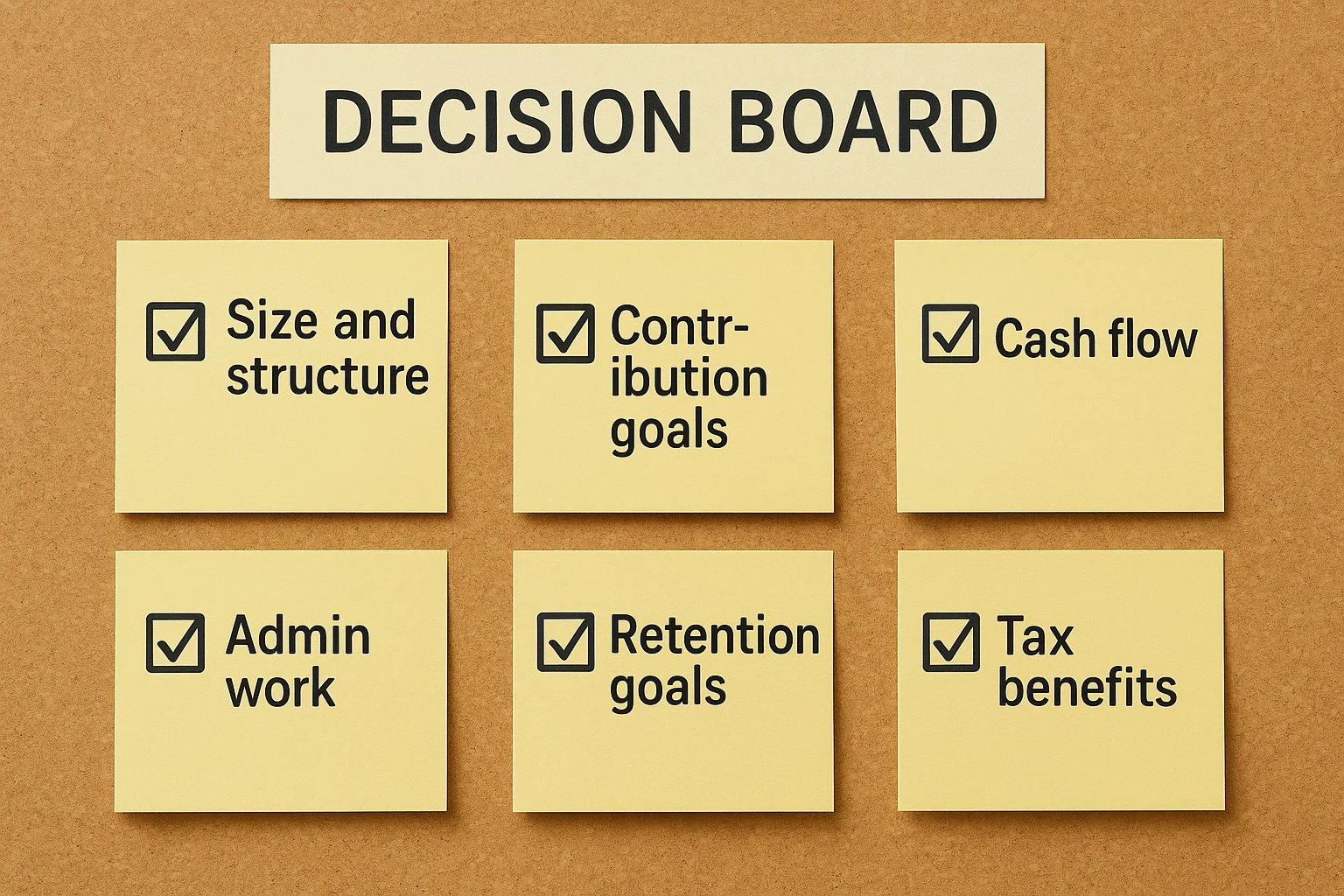
Choosing a plan is easier when you know what matters. Here are the main things to think about before you decide.
Business Size and Structure
Your legal structure affects what you can contribute and how you handle taxes. Here is how it breaks down.
Sole proprietors often choose simple and flexible plans like a Solo 401(k) or SEP IRA.
LLCs, S-Corps, and C-Corps may need plans that fit both owners and employees.
A special case exists when you have no employees except your spouse. In that situation, you can qualify for plans like a Solo 401(k) that allow very high contributions.
Contribution Goals
Ask yourself how much you want to save each year.
Want to save the maximum allowed by law? Look at plans like a Solo 401(k) or Defined Benefit Plan.
Want something easy that lets employees save too? A SIMPLE IRA may fit.
Need flexibility from year to year? SEP IRAs and Solo 401(k)s let you adjust based on income.
Your contribution goal helps narrow your choices fast.
Cash Flow and Flexibility
Some plans require employer contributions. Others make them optional.
If your income changes from year to year, flexible plans like a SEP IRA or Solo 401(k) work well.
If you want predictable costs, a SIMPLE IRA or Safe Harbor 401(k) provides clear rules for contributions.
If you prefer full control, pick a plan where you only contribute when you want to.
Choose a plan that matches how steady your income is.
Administrative Capacity
Every plan has a different level of admin work.
SIMPLE IRA and SEP IRA are easy. No heavy paperwork.
Traditional and Safe Harbor 401(k)s require more oversight, payroll work, and filings.
Defined Benefit Plans need professional help and ongoing management.
Make sure you can handle the admin load or outsource it if needed.
Hiring and Retention Goals
If you plan to grow your team, a retirement plan becomes a real advantage.
Matching contributions helps keep employees long-term.
Vesting schedules, often used in 401(k)s, encourage people to stay.A good plan makes your business look more professional and stable.
This matters a lot when competing with bigger companies.
Tax Benefits and Deduction Opportunities
Every plan comes with tax perks.
Employer contributions are usually tax-deductible.
Some plans help reduce self-employment taxes.
The IRS gives up to $5,000 per year in startup retirement plan tax credits.
These tax perks can lower your business costs while helping you save more. You do not need to be a tax expert. You just need the right plan.
Overview of the Main Retirement Plan Options for Small Businesses
Here is a simple table to help you compare the most common choices.
Plan Type | Best For | Employee Option | Flexibility | Admin Level |
Solo 401(k) | Self-employed with no employees | No | High | Medium |
SEP IRA | Owners with few or no employees | No | High | Low |
SIMPLE IRA | Businesses under 100 employees | Yes | Medium | Low |
Traditional 401(k) | Growing teams | Yes | Medium | High |
Safe Harbor 401(k) | Mixed-pay teams needing easy compliance | Yes | Medium | High |
Defined Benefit Plan | High-income owners | No or yes, depending on the structure | Low | Very high |
Deep Dive: Pros, Cons, and Best Fits of Each Plan
Now, let us break down each option in a simple way.
SEP IRA
Best for: Owners with few or no employees.
Pros:
Easy to set up.
High contribution limits.
You can change contributions each year.
Cons:
You must give the same percentage to all eligible employees if you have any.
Best fit: One-person businesses, seasonal income, or contractor-heavy teams.
If you want a full breakdown of how SEP IRAs work, you can read our complete guide to SEP IRAs for self-employed and small business owners.
SIMPLE IRA
Best for: Businesses with fewer than 100 employees.
Pros:
Employees can contribute.
Low cost.
Easy to maintain.
Cons:
Employer contributions are required.
Best fit: Early-stage teams with steady income.
Solo 401(k)
Best for: self-employed owners with no employees except a spouse.
Pros:
Highest possible contribution limits.
Allows both employer and employee contributions.
Often includes a Roth option.
Cons:
The plan ends once you hire employees outside of your spouse.
Traditional 401(k) for Small Businesses
Best for: growing companies.
Pros:
High contribution limits.
Strong benefits package.
Roth option available.
Cons:
More paperwork.
Employer responsibilities are higher.
Annual filings required.
Safe Harbor 401(k)
Safe Harbor 401(k)s are helpful when you want to avoid IRS testing. They make compliance easier by following strict employer contribution rules.
Best for: businesses with employees at different pay levels.
Pros:
No nondiscrimination testing.
Predictable contributions.
Cons:
Employer contributions are required.
Defined Benefit Plan
This is the most advanced option.
Best for: high-income owners who want the largest tax deduction.
Pros:
Lets you save more than any other plan.
Cons:
Very expensive.
Requires long-term commitment.
Side-by-Side Decision Framework: Which Plan Is Best for Your Business?
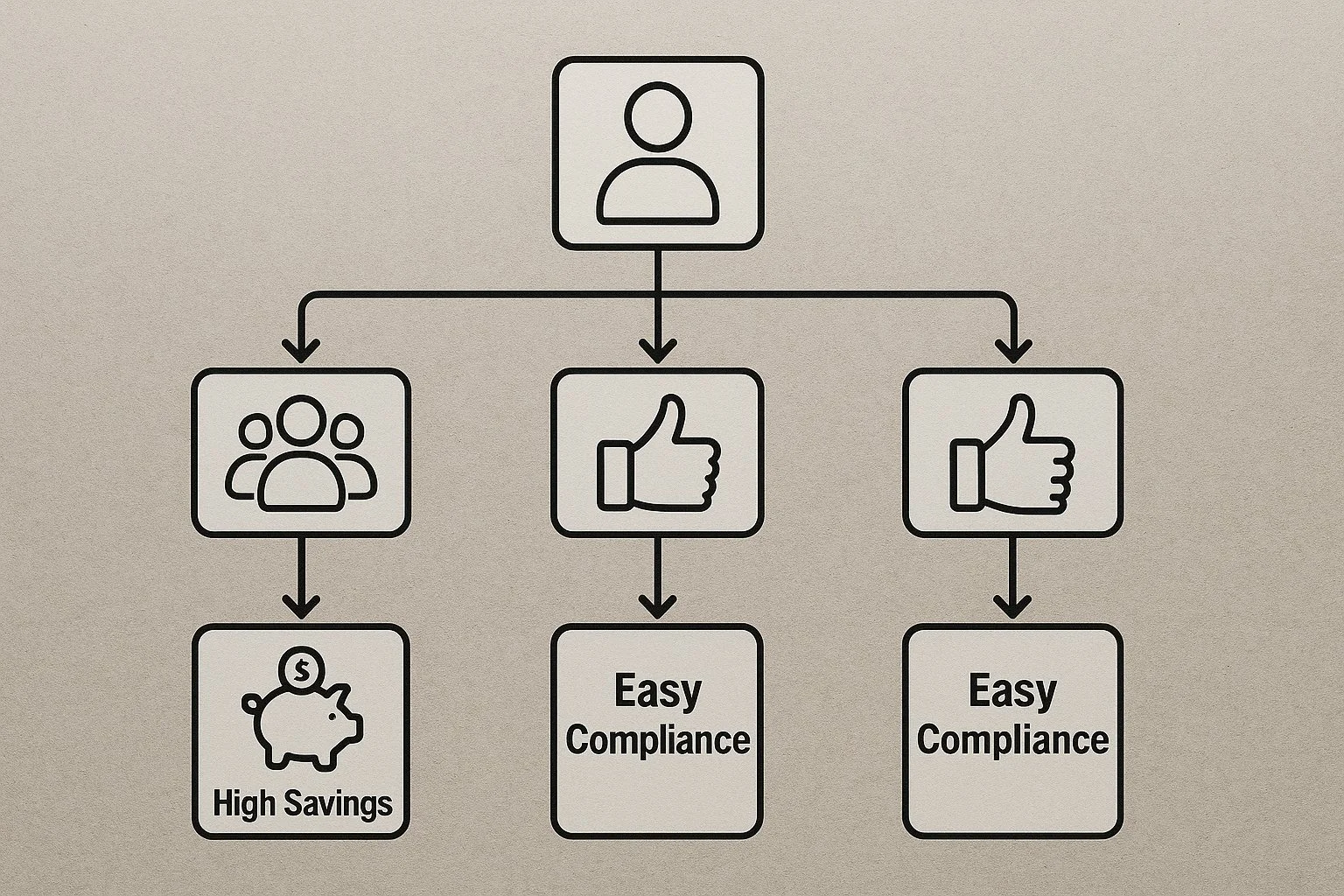
Here is a simple way to match your situation with the right plan.
You have no employees: Choose a Solo 401(k) or SEP IRA.
You have 1 to 100 employees and want something simple: Go with a SIMPLE IRA.
You want higher savings and strong employee benefits: A Traditional 401(k) fits well.
You want easy compliance with employees at different pay levels: Use a Safe Harbor 401(k).
You want the biggest tax deduction possible: Choose a Defined Benefit Plan.
Common Mistakes Small Business Owners Make When Choosing a Plan
Here are mistakes you should avoid.
Picking a plan only because it has high contribution limits.
Forgetting employer contribution rules.
Choosing a plan that does not grow with your business.
Missing IRS startup tax credits.
Not checking employee eligibility rules.
Avoid these, and you will make a smart and long-lasting choice.
Final Thoughts

Choosing a retirement plan does not need to feel overwhelming. Start with your business size, your income goals, and how much admin work you can handle. From there, the right plan becomes obvious. The best plan is the one that matches your current stage and supports your future growth.
If you want extra help, consider talking to a financial professional who can guide you based on your income, structure, and long-term goals.
Frequently Asked Questions
What is the easiest retirement plan for a small business?
A SIMPLE IRA is usually the easiest because it has low cost, simple rules, and easy setup.
What is the best retirement plan for sole proprietors?
A Solo 401(k) is often the best because it lets sole proprietors save the most with strong tax perks.
Do small businesses need a 401(k)?
Not always. Many small businesses start with a SEP IRA or SIMPLE IRA before moving to a 401(k) as they grow.
Which is better between SIMPLE IRA and SEP IRA?
A SIMPLE IRA works better for businesses that want employees to contribute. A SEP IRA works better for owner-only businesses.
How do contribution limits work?
The IRS sets yearly limits for each plan. These limits depend on plan type, owner income, and whether employees are included.
What happens if I hire employees and already have a Solo 401(k)?
Your Solo 401(k) becomes invalid, and you must switch to a different plan that supports employees.
What tax benefits do small business retirement plans offer?
Employer contributions are usually tax‑deductible, and employee contributions grow tax‑deferred until withdrawal.