What Happens to Your Real Estate If You Die Without a Will in the United States?

Gary Gal

Owning real estate is a big deal. It might be your home, a rental property, or a building your business depends on. But here is a question many busy professionals avoid. What happens to that property if you die without a will?
The answer is not simple, and it is rarely what people expect. Without a will, the government does not guess your wishes. Instead, state law follows a fixed formula to decide who inherits, how property is handled, and when heirs gain control. That process can delay access, create tax issues, and even force a sale of the property.
This guide explains everything in simple terms so you can understand the risks and plan smarter. By the end, you will learn:
Who inherits real estate when there is no will
How probate affects property ownership
Financial and tax risks for heirs
What business owners must know
How to prevent problems with simple planning tools
Let’s walk through it step by step.
What Does “Dying Without a Will” Mean?

Dying without a will is called intestacy. When this happens, state law decides who inherits your property instead of your personal wishes.
In simple terms, if there is no valid will:
You do not choose who receives your property
Informal promises have no legal effect
The court applies a standard inheritance order
Why intestacy exists
States created intestacy laws to provide a default plan when someone does not leave instructions. The law assumes property should stay within a close family.
But the system is rigid. It does not consider:
Business relationships
Long-term partners who are not married
Verbal agreements
Personal intentions
For business owners and executives, this can create serious complications. Property tied to operations may transfer to people with no involvement in the business.
Who Inherits Your Real Estate Without a Will?
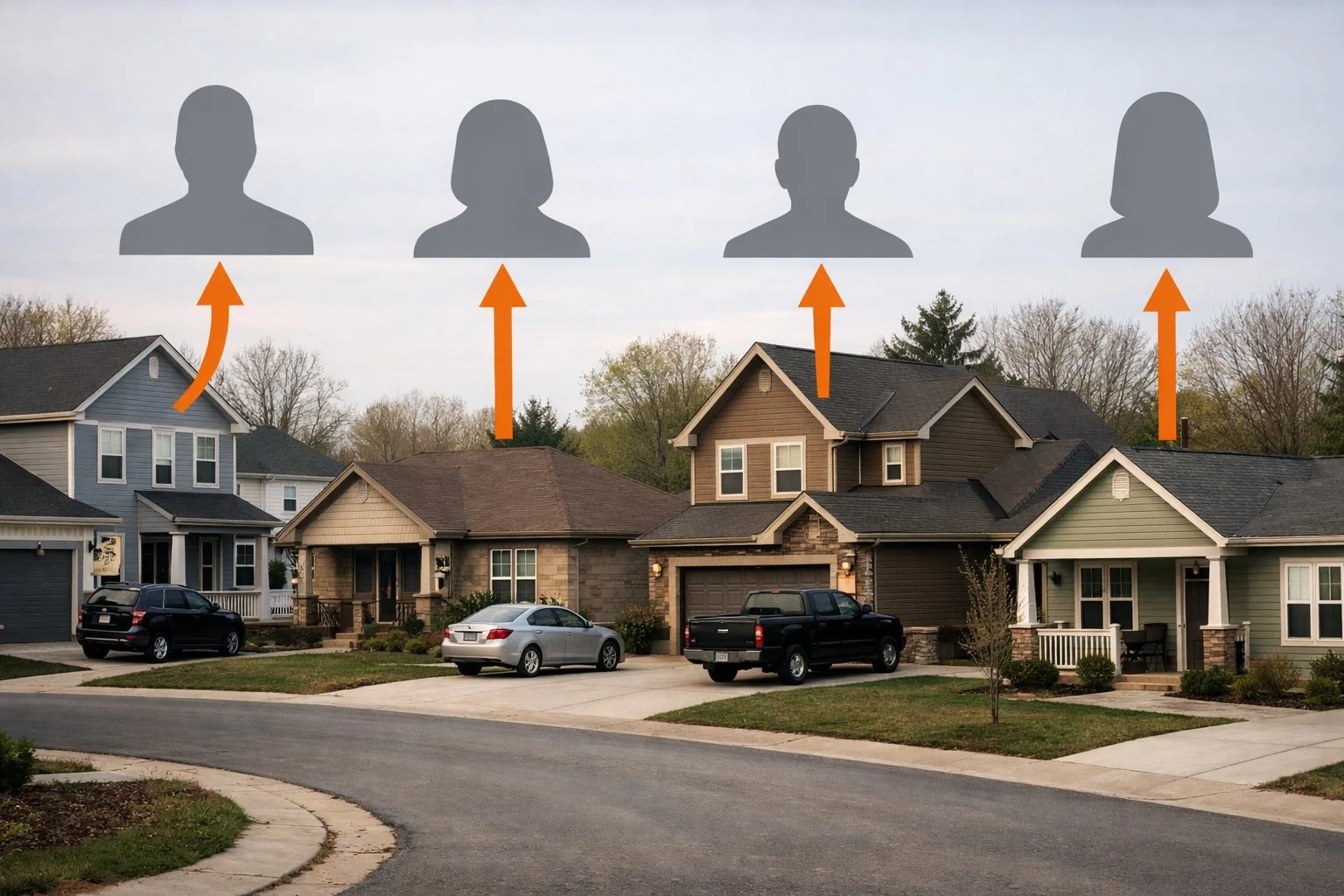
State intestacy laws follow a strict inheritance order, usually prioritizing spouse, children, parents, and then extended family.
Each state has its own formula, but the general pattern is similar across the country.
Typical inheritance order
Situation | Likely Heirs |
Married, no children | Spouse inherits most or all |
Married with children | Spouse and children share |
Single with children | Children inherit equally |
No spouse or children | Parents inherit |
No parents | Siblings inherit |
No relatives | Property goes to the state |
If you are married
Spouses usually inherit the largest share. However, outcomes vary depending on whether you have children together or from previous relationships.
In some states:
Spouse receives all property
Spouse shares with children
Spouse receives half of marital property
If you have children
Children typically inherit equal shares. If a child has died, their share may pass to their children.
Important considerations:
Minor children cannot directly manage property
Court supervision may be required
Guardianship issues may arise
If you are single with no children
The inheritance line moves outward:
Parents
Siblings
Nieces and nephews
Extended relatives
If no heirs exist
In rare cases, property transfers to the state. This is called escheat.
What Happens to the Property During Probate?

Without a will, a probate court supervises the estate, appoints an administrator, pays debts, and transfers or sells real estate according to state law.
Probate is a court process that ensures property is distributed legally.
Step-by-step probate process
Court appoints an administrator
This person manages the estate since no executor was named.Property is identified and valued
Real estate must be appraised to determine fair market value.Debts and taxes are paid
Creditors can make claims against the estate.Property is transferred or sold
Heirs receive ownership after obligations are settled.
Why probate matters for real estate
Real estate cannot usually transfer ownership until probate is complete. This can create delays and financial strain.
Business owner impact
If property is used for business purposes:
Operations may pause
Lease arrangements may be affected
Financing agreements may be reviewed
Decision-making authority becomes unclear
This is one of the biggest risks competitors often overlook.
If you want to know exactly what happens during probate, check out our complete guide about "What Happens to Real Estate During Probate in the US?".
Can Heirs Be Forced to Sell the Property?
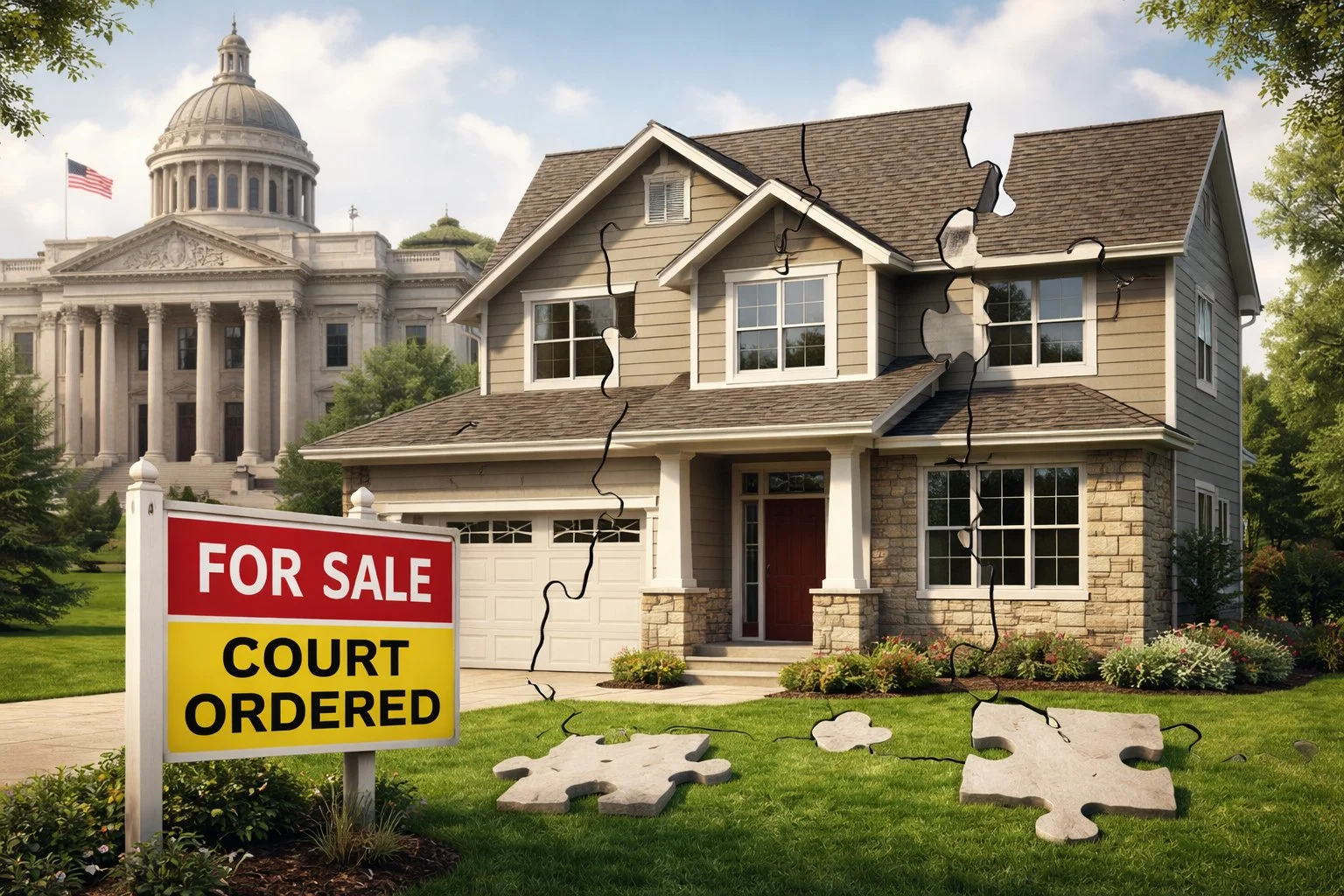
Yes. If multiple heirs inherit property and cannot agree on its use, a court can order a sale to divide the value.
This situation is common when several family members inherit a single property.
Why forced sales happen
Heirs disagree about keeping or selling
Some heirs cannot afford expenses
Property must be divided fairly
Court orders a partition sale
Example scenario
Three siblings inherit a rental property:
One wants to keep it
One wants cash
One cannot pay maintenance
A court may order the property sold and proceeds divided.
Financial consequences
Sale may occur at an unfavorable time
Legal costs reduce value
Business continuity may suffer
What Happens to Mortgages, Taxes, and Liens?

Debts tied to real estate remain in place after death. The estate must pay them, or heirs inherit the property with the obligation.
Ownership does not erase financial responsibility.
Obligations that continue
Mortgage balance
Property taxes
Home equity loans
Contractor liens
Judgment liens
How debts are handled
Estate funds are used first
Property may be sold to pay debts
Heirs may assume or refinance loans
Why this matters for professionals
Real estate often supports income generation. When debts remain:
Cash flow may be disrupted
Business property may need refinancing
Personal guarantees may affect heirs
Tax Consequences Most People Overlook

Real estate inherited without a will may trigger estate tax exposure, valuation challenges, and capital gains considerations for heirs.
Tax outcomes depend on estate size, property value, and state law.
Key Tax Concepts
Step-Up in Basis
Heirs receive property valued at market price at time of death. This can reduce capital gains taxes if sold later.
Estate Tax Thresholds
Large estates may owe federal or state estate tax.
Valuation Requirements
Professional appraisal often required
Impacts tax reporting
Why This Matters for Business Owners
Commercial property valuation affects tax liability
Poor records increase risk
Planning reduces exposure
This is one of the most overlooked risks in intestate real estate transfer.
Special Rules That Affect Real Estate Inheritance
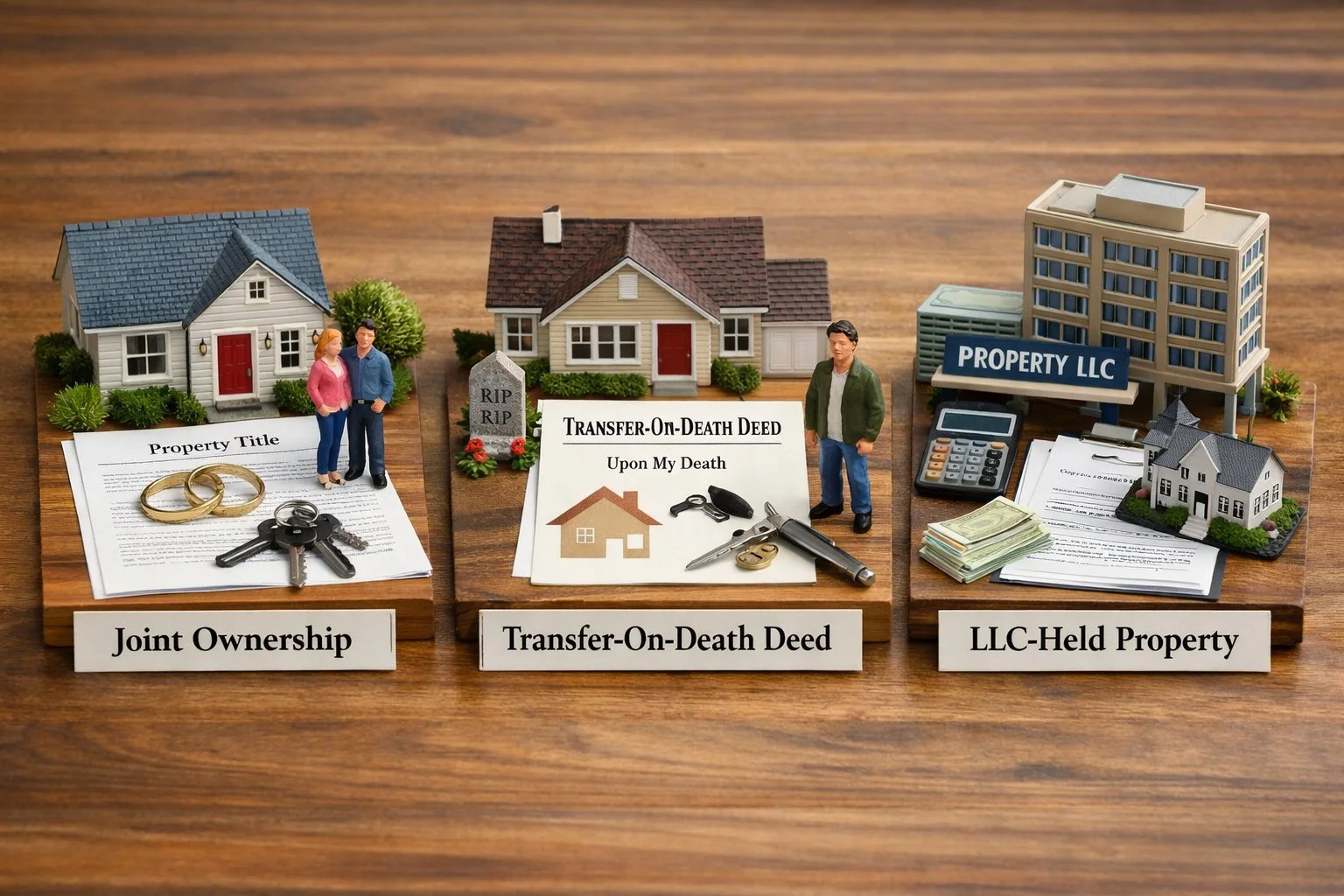
Ownership structure determines whether real estate goes through probate or transfers automatically.
How property is titled can change everything.
Joint ownership with survivorship
When two owners hold property with survivorship rights:
Ownership automatically transfers to the surviving owner
Probate is usually avoided
Tenancy by the entirety
Available for married couples in many states:
Surviving spouse receives full ownership
Offers creditor protection in some cases
Transfer-on-death (TOD) deeds
Some states allow TOD or beneficiary deeds:
Owner names a beneficiary in advance
Property transfers directly upon death
Probate is bypassed
Property owned by a business entity
This is critical for your target audience.
If property is owned by an LLC or corporation:
Ownership follows the entity’s governing documents
Membership interest transfers, not the property itself
Operating agreements control succession
This structure often prevents forced sales and probate delays.
Community Property States and Spousal Rights
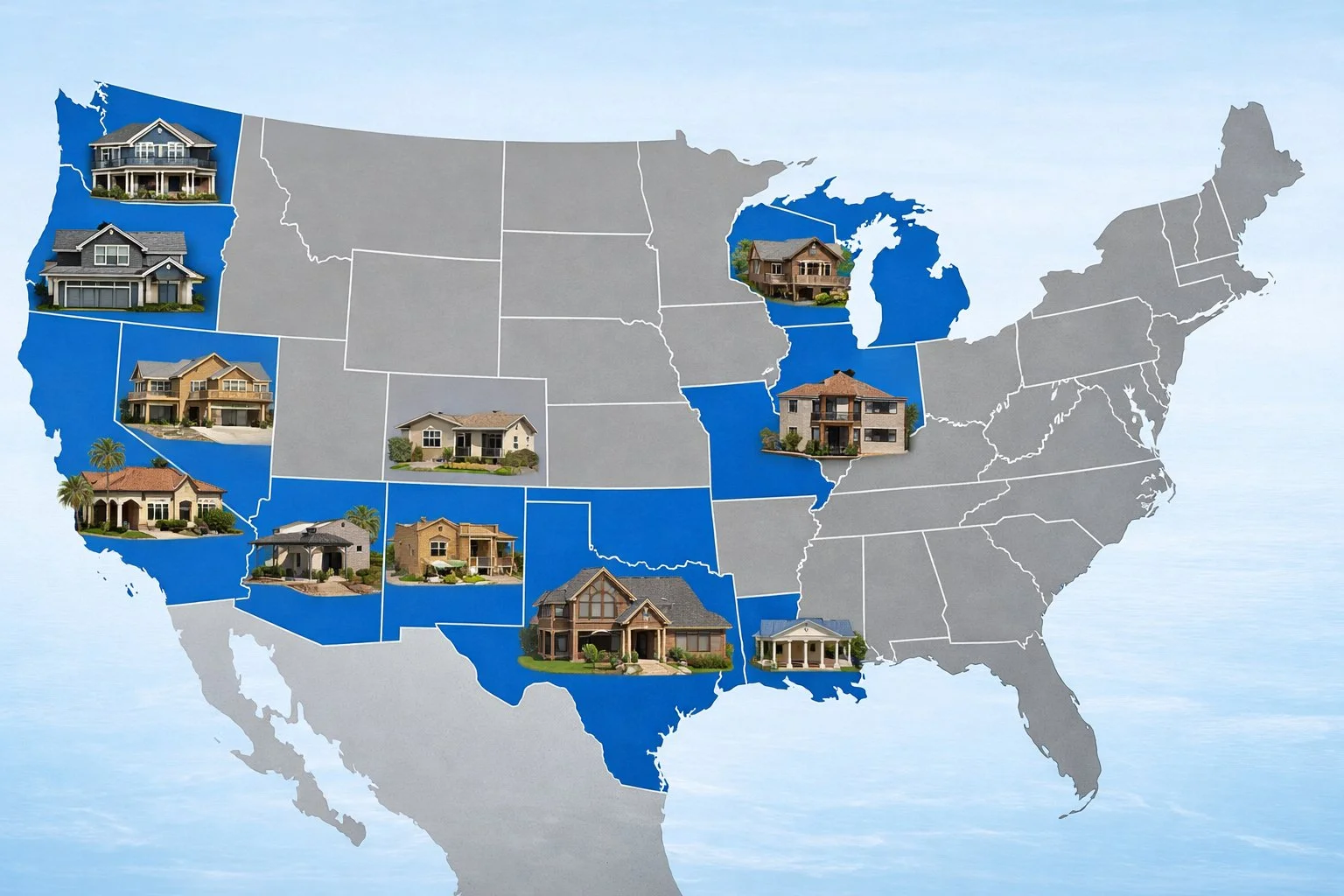
In community property states, spouses generally own half of marital property and may inherit additional portions under intestacy rules.
Community property rules apply in certain states, including:
Arizona
California
Texas
What community property means
Property acquired during marriage is considered jointly owned.
When one spouse dies without a will:
Surviving spouse keeps their half
Additional share may be inherited
Distribution depends on whether children exist
Understanding marital property rules is essential for estate planning accuracy.
How Long Does the Process Take and What Does It Cost?

Probate without a will can take months to years and reduces estate value through court costs, legal fees, and property expenses.
Timeline depends on:
Estate complexity
Disputes among heirs
State procedures
Common Costs
Cost Type | Description |
Court filing fees | Required to open probate |
Attorney fees | Legal administration |
Property maintenance | Insurance, repairs |
Appraisal fees | Property valuation |
Tax preparation | Estate reporting |
Hidden Financial Impact
Delayed access to property
Reduced estate value
Administrative burden on heirs
For professionals with high-value assets, delays can be costly.
How to Avoid These Outcomes
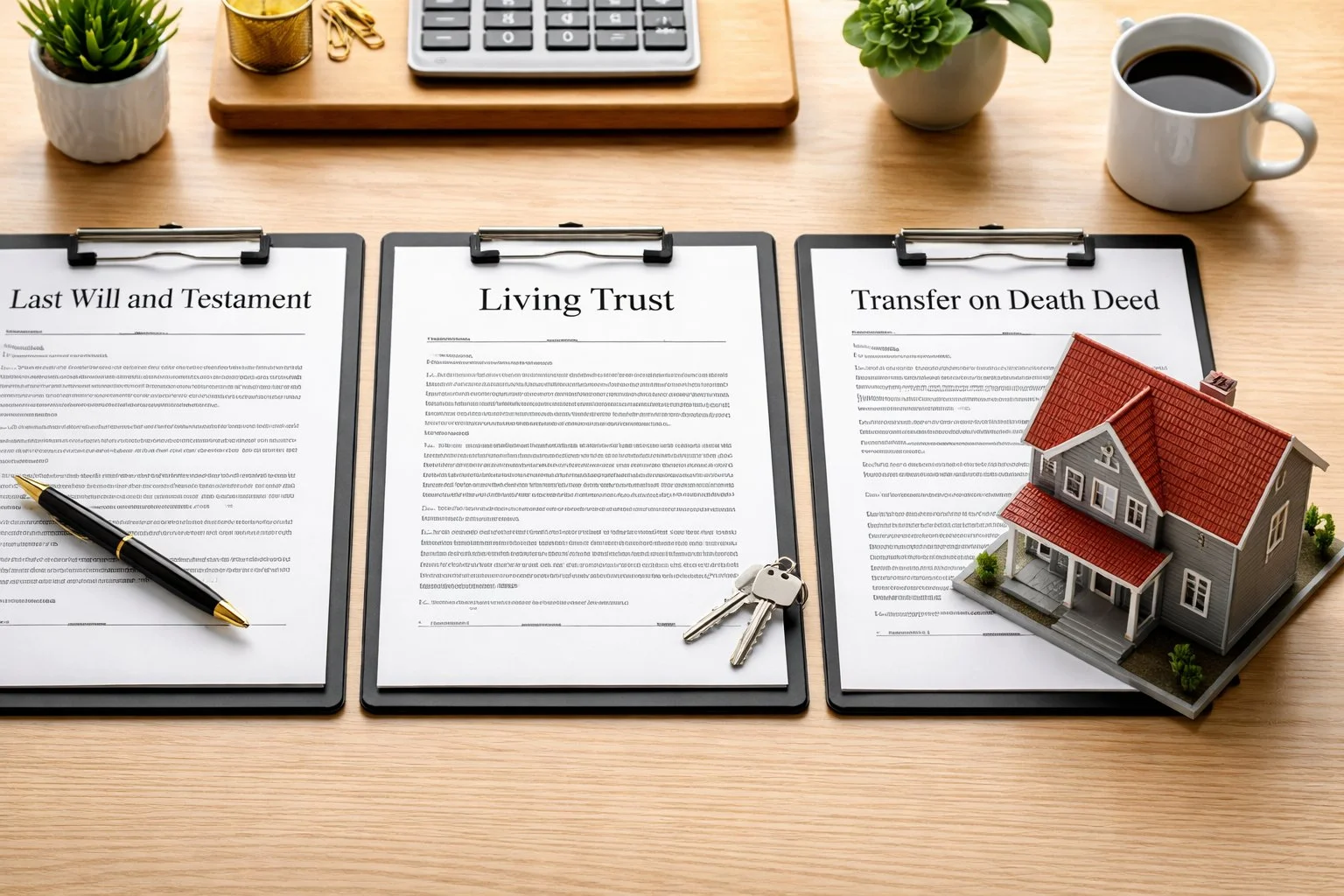
Planning tools allow you to control property distribution, reduce probate delays, and protect business continuity.
You do not need a complex plan to improve outcomes.
Effective planning strategies
1. Create a legally valid will
Specifies who inherits property.
2. Establish a living trust
Allows property transfer without probate.
3. Use survivorship ownership
Transfers ownership automatically.
4. Record a transfer-on-death deed
Available in many states.
5. Hold property in an LLC
Provides continuity and control.
Why planning matters for professionals
Planning helps:
Maintain business stability
Reduce legal costs
Protect heirs from disputes
Improve tax outcomes
Final Thoughts

If you die without a will, state law controls who inherits your real estate, probate can delay access, and financial obligations and tax exposure may affect both your heirs and your business operations.
What this means for you
Control is limited. The court, not your preferences, decides distribution.
Operations can be disrupted. Business-used property may be tied up in probate.
Financial risk continues. Mortgages, taxes, and liens still apply.
Planning reduces uncertainty. Simple tools can protect both family and business continuity.
If real estate plays a role in your income or operations, consider reviewing how your property is titled and documented. A conversation with a qualified legal or tax professional can help you confirm your setup and avoid avoidable surprises.
Frequently Asked Questions
Does a spouse automatically inherit the house?
Not always. In many states, spouses inherit most property, but children may share ownership depending on family structure.
Can property be transferred without probate?
Yes. Joint ownership, trusts, and beneficiary deeds can bypass probate.
What happens to rental property without a will?
It becomes part of the estate and is distributed to heirs according to state law.
Can heirs sell a house during probate?
Usually, yes, but court approval may be required.
What happens if the property has a mortgage?
The loan remains. The estate or heirs must continue payments or refinance.
What happens to business real estate?
Ownership depends on how the property is titled and whether it is owned personally or by an entity.
What happens to real estate if there are multiple heirs and no agreement?
If multiple heirs inherit real estate and can’t agree on what to do, the property may go through a legal process called a partition action. This can result in the court ordering the sale of the property and dividing the proceeds among the heirs.